Exuma Park no-take zone: what it bans, why it exists and how to report poaching
Fishing, conching, shelling and lobstering are banned in Exuma Cays Land & Sea Park. What the no-take rule covers, the penalties, and how to report poaching.
Exuma Cays Land & Sea Park is a no-take zone: no fishing, conching, shelling or lobstering, and nothing living or dead may be removed from within its boundaries1. Poaching brings fines and confiscation of vessels1. If you see poaching, call "Exuma Park" on VHF channel 092.
- At a glance
- Fishing
- Banned1
- Conch, shells, lobster
- Banned, nothing removed1
- Penalty
- Fines and vessel confiscation1
- Report poaching
- VHF 09, "Exuma Park"2
- Zone covers
- Land and sea within park boundaries1
On this page
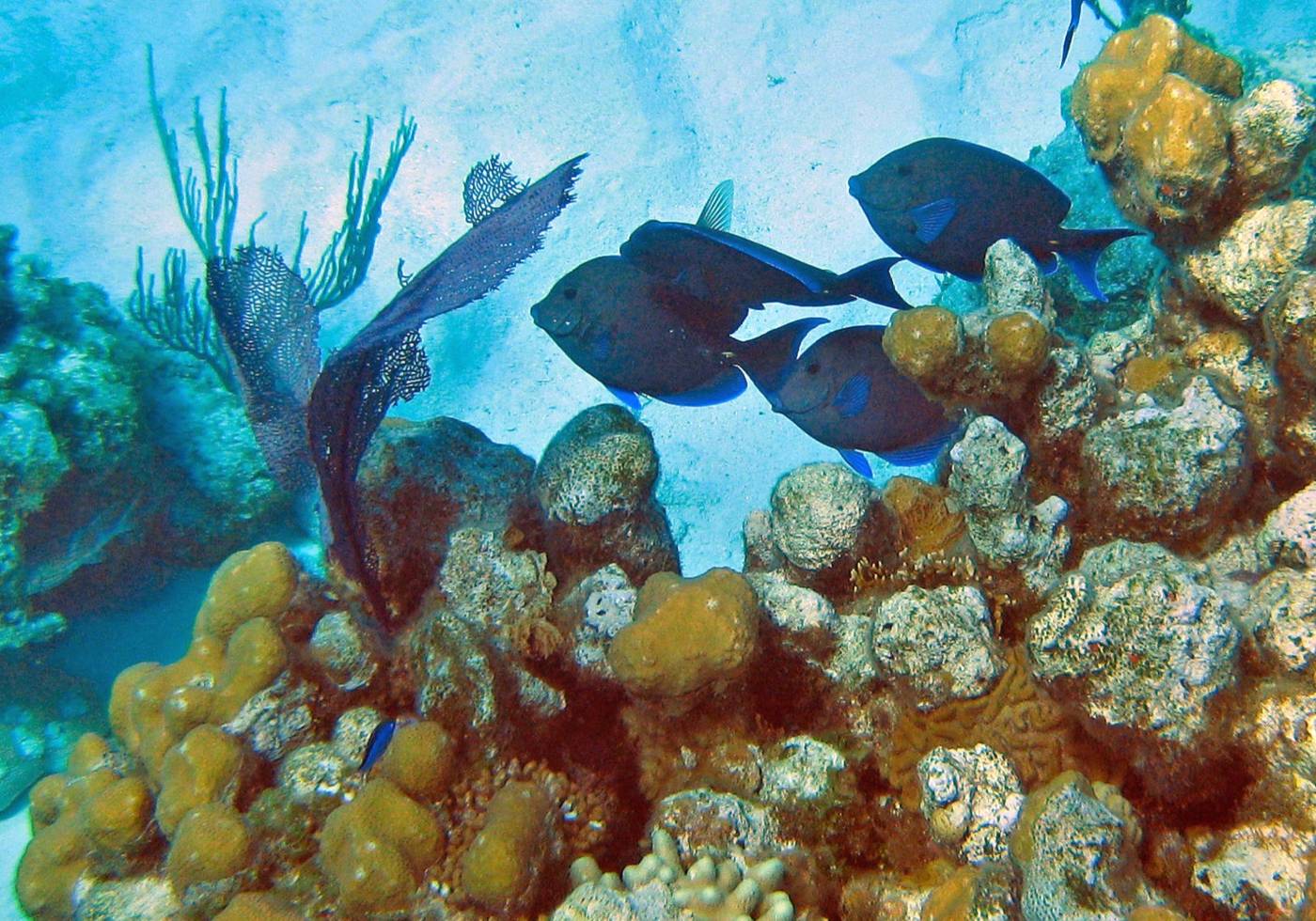
A no-take zone is an area where nothing is taken out: no catch, no souvenirs, no exceptions for casual visitors. The Exuma Cays Land & Sea Park applies that rule to the whole park, water and land.
This page, part of the Exuma Cays Land & Sea Park guide, covers what the rule bans, why it matters to the fish you will see, and what to do if you witness poaching. For the full rule list, read the park rules.
What the no-take rule bans
The park is a no-take zone: no fishing, conching, shelling or lobstering, and nothing living or dead may be removed from within the boundaries of Exuma Park1.
The Trust repeats it in plain terms: no fishing, shelling or conching of any kind is permitted within the park boundaries2. Read the list literally: fishing, conching, shelling and lobstering are all banned, whatever the method.
“Nothing living or dead” is the phrase to remember. A snorkeler who pockets a shell breaks the rule as surely as a spearfisher1.
What the rule protects
The Trust describes the park as the first marine reserve in The Bahamas and the wider Caribbean, established in 19582. It calls the park the most visited national park in The Bahamas2. As the first land and sea park in the world, it has shaped marine protected areas around the globe2. It won the Platinum Global Ocean Refuge Award in 20182. Visitors can watch birds, fish, turtles and iguanas there2.
The wildlife guide covers each of them, and the park history page covers how the reserve began.
Why the park is no-take
The Trust made the park a protected replenishment zone in 19854, and its waters have been managed as a no-take reserve since 19861,3. That let commercially important species such as queen conch, Nassau grouper and spiny lobster thrive3. It was the first no-take zone in the Caribbean3.
One animal is the exception to the rule: ospreys are the only creatures allowed to fish in the park4.
Penalties
There are fines and confiscation of vessels for poaching violations1.
The rule names the penalty plainly: fines and confiscation of vessels1. Your boat is the stake. A charter captain or a crew member who fishes is risking the vessel for everyone aboard. If you are a guest on a chartered boat, tell the skipper the rule before you leave the dock.
The park is also staffed. The Bahamas Defence Force has stationed three officers at park headquarters to assist park staff with enforcement matters2.
How to report poaching
Park wardens ask all visitors to report any poaching or other unusual activity2. The steps are short:
- Call “Exuma Park” on VHF channel 092.
- Say what you saw and where.
- If you prefer, give a fictitious vessel name such as “Miss Molly” and stay anonymous2.
The request covers other unusual activity too, not only fishing2. You do not need to confront anyone, and you can call without giving your name. Channel 16 is monitored 24 hours a day for emergencies2.
The park office is on a remote small island, so a call can take time to get through2. Office hours are Monday to Friday 9am to 5pm and Sunday 9am to 12pm2. The Defence Force can be reached on VHF 162.
Where the zone starts
The rule applies everywhere inside the park boundary. The four corners, in degrees, minutes and seconds, are northwest Lat 24°30′37″ N, Long 76°52′37″ W; northeast Lat 24°35′30″ N, Long 76°45′50″ W; southwest Lat 24°14′25″ N, Long 76°36′02″ W; and southeast Lat 24°18′37″ N, Long 76°28′47″ W2. Enter them as waypoints before you leave the dock, and keep gear stowed until you are clear of the line. The park boundaries page has the map.
Before you go
Fishing gear stays stowed while you are inside the park1. Fees are covered in the fees and mooring fees guide. Then read the park rules in full, because the no-take rule is only one of them. For the animals the rule protects, see the wildlife guide.
Read next
Exuma Cays Land & Sea Park rules: what boaters and visitors must follow
The Exuma Cays Land & Sea Park rules in one list: no-take zone, anchoring, speed limits, trails, pets, camping, fires, drones, trash and how to report poaching.
parkWildlife in Exuma Park: hutia, iguanas, seabirds and what you can see
The wildlife of Exuma Cays Land & Sea Park: the Bahama hutia, rock iguanas, nesting seabirds, turtles and fish, plus the park rules that protect them.
parkExuma Park boat fees: mooring, anchoring, charter and camping rates
Exuma Cays Land & Sea Park boat fees in one place: moorings by boat length, anchoring per foot, charter surcharges, landing fees, camping and annual passes.
Questions people ask
Can you fish in Exuma Cays Land and Sea Park?
No. The park is a no-take zone, with no fishing, conching, shelling or lobstering of any kind inside its boundaries1,2. Nothing living or dead may be removed1. Fish outside the boundary instead.
What happens if you poach in the Exuma Park?
The Bahamas National Trust's rules provide for fines and confiscation of vessels for poaching violations1. The park's wardens ask visitors to report any poaching they see2.
Can you pick up shells in Exuma Park?
No. Shelling is banned, and the rule is that nothing living or dead may be removed from the park1,2. That includes shells on the beach. Photograph them and leave them in place.
Sources (4)
- Exuma Cays Land and Sea Park Rules (PDF)BNT
Bahamas National Trust · bnt.bs · checked 2026-10-18 - Exuma Cays Land & Sea ParkBNT
Bahamas National Trust · bnt.bs · checked 2026-10-18 - Exuma Cays Land and Sea Park in The Bahamas
The Nature Conservancy · nature.org · checked 2026-10-18 - Exuma Cays Land and Sea Park
Wikipedia · en.wikipedia.org · checked 2026-10-18
Photo credits (1)
- James St. John / Wikimedia Commons · CC BY 2.0 · source
_(San_Salvador_Island,_Bahamas)_4_(15964039649).jpg)
Park fees and rules come from the Bahamas National Trust or the Bahamas government; check them again before you go. How we check facts.