Bahamian rock iguanas in Exuma Park: the species, the Exuma Island iguana and their status
Are there iguanas in the Exumas? The northern Bahamian rock iguana and its Exuma Island and Allen's Cay subspecies: status by level, threats, diet, rules.
Yes. The Bahamas National Trust lists iguanas among the wildlife to see in the Exuma Cays Land & Sea Park4. Wikipedia's summary of the IUCN Red List rates the northern Bahamian rock iguana vulnerable as a species and its Exuma Island subspecies critically endangered1,2. All Bahamian rock iguanas are protected under the Wild Animals Protection Act of 19682.
- At a glance
- Species
- Northern Bahamian rock iguana, found on Andros and the Exumas1
- Status, species
- Vulnerable; under 5,000 in the wild1
- Status, Exuma Island iguana
- Critically endangered; under 1,300 in 20042
- Status, Allen's Cay iguana
- Critically endangered3
- Law
- Wild Animals Protection Act of 19682
- Pets in the park
- Beaches only5
On this page
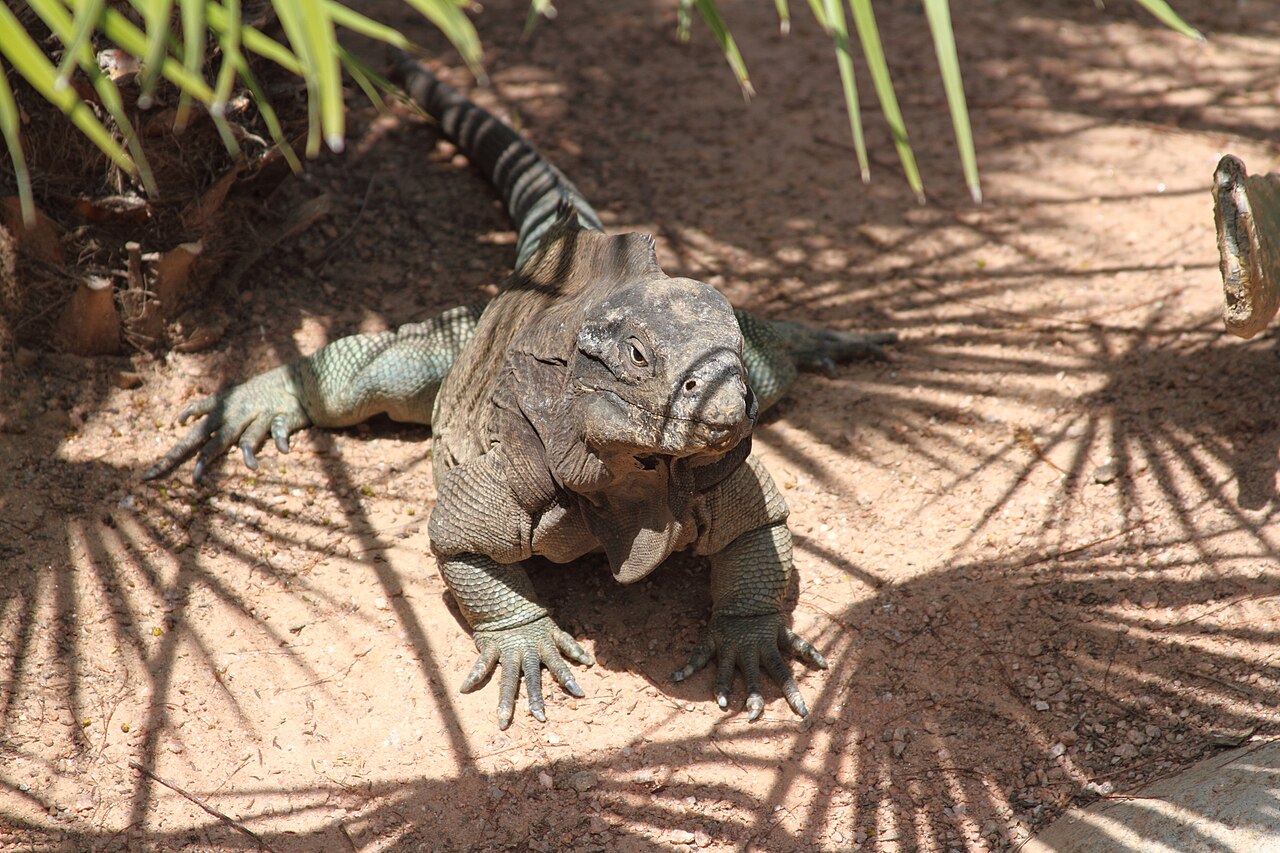
Rock iguanas are among the animals the Exuma Cays Land & Sea Park protects. The name covers one species and several subspecies, and each has its own conservation status. This page keeps the levels apart. For the rest of the park’s animals, see the wildlife guide.
Are there iguanas in the Exuma Cays Land & Sea Park?
Yes. The Bahamas National Trust (BNT) lists observing tons of wildlife, including birds, fish, turtles and iguanas, as something to do in the park4. The northern Bahamian rock iguana (Cyclura cychlura) is found on Andros Island and the Exuma islands in the Bahamas1.
In 2002, Shedd Aquarium translocated sixteen iguanas to the Exuma Cays Land and Sea Park in an effort to establish the species in a protected area2. Since 1995, Shedd Aquarium has allowed volunteers to help survey populations of Exuma Island iguanas as a form of ecotourism2.
Which Bahamian rock iguana lives in the Exumas?
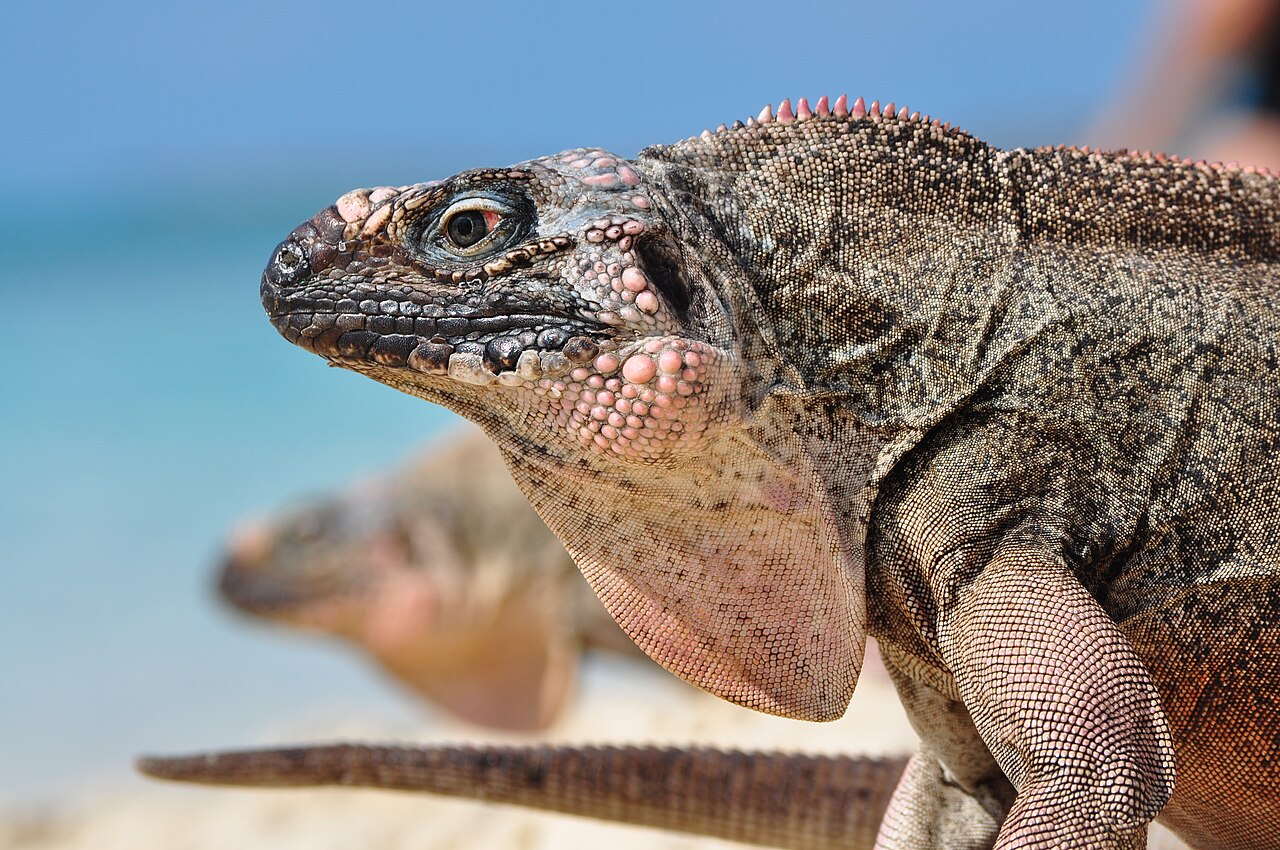
The Exuma Island iguana is a subspecies found on the Exuma island chain2. It lives on at least seven small cays in the central and southern Exumas: Bitter Guana, Gaulin, White Bay, Noddy, North Adderly, Leaf and Guana2. The Allen’s Cay rock iguana is another subspecies, found on Allen’s Cay and adjacent islands3. The Allen’s Cay iguanas guide explains where that cay sits in relation to the park boundary.
Are Bahamian rock iguanas endangered?
The answer depends on the level. Each row below gives its source.
| Level | Status | Source |
|---|---|---|
| Northern Bahamian rock iguana, whole species | Vulnerable; wild population under 5,0001 | Wikipedia, citing the IUCN Red List |
| Same species, 2004 IUCN assessment | Species vulnerable; each of its three subspecies endangered1 | Wikipedia, citing the IUCN |
| Exuma Island iguana (subspecies) | Critically endangered; under 1,300 wild animals in 20042 | Wikipedia |
| Allen’s Cay rock iguana (subspecies) | Critically endangered3 | Wikipedia |
The species population had decreased by at least 50% over the last 60 years1. The Exuma Island iguana was said to have declined by at least 20% over the past 50 years2.
What threatens Exuma iguanas?
In 2004 the IUCN said the Exuma populations were imperilled by feral animals (goats), fires caused by tourists, and rapid private land acquisition, primarily for tourism1. Feral animals that pose a threat are cats, dogs, hogs and goats. Dogs prey on juvenile and adult iguanas, and hogs eat their eggs1. All populations were still occasionally hunted for meat or for the pet trade, according to the IUCN in 20041.
A large-scale fire, possibly caused by a tourist’s cigarette, was reported on an iguana-inhabited island in 20042.
What do Exuma Island iguanas eat, and how long do they live?
The Exuma Island iguana, like most Cyclura species, is primarily herbivorous, eating leaves, flowers, berries and fruits from over 100 plant species2. The longevity record in captivity is 23 years and 6 months2.
Can you feed the iguanas?
Tourists often feed human food items to iguanas on Leaf Cay, according to a 2014 report in The Tribune6. A warden quoted there said feeding takes the iguanas away from their natural food cycle and also causes problems for them6. The report adds that it is dangerous to allow people to hand-feed them, since a red fingernail can be mistaken for food6.
What protects the iguanas?
Like all Bahamian rock iguanas, the Exuma Island iguana is protected in the Bahamas under the Wild Animals Protection Act of 19682. The Bahamian government has no captive breeding or conservation program for the Exuma Island iguana2.
Pets are restricted to beaches only. No pets are permitted on trails or in the brush5.
Pets must be leashed or physically restrained from harassing or harming wildlife and vegetation at all times5.
The park’s rules say pets have caused the destruction of bird nesting sites and the loss of rare or endangered species, rock iguanas and hutia among them5. Captive wild species, whether native or non-native, and barnyard animals are prohibited from park property5. Read the full park rules, then see the Bahamian hutia guide and the Nassau grouper guide.
Read next
Wildlife in Exuma Park: hutia, iguanas, seabirds and what you can see
The wildlife of Exuma Cays Land & Sea Park: the Bahama hutia, rock iguanas, nesting seabirds, turtles and fish, plus the park rules that protect them.
parkBahamian hutia in Exuma Park: where it lives, what it eats and how it is protected
The Bahamian hutia is the only land mammal native to The Bahamas. Where it lives, the Warderick Wells transplant, its conservation status and park pet rules.
parkNassau grouper in the Exumas: closed season, status and the Exuma Park no-take rule
Can you fish for Nassau grouper in Exuma Park? No: the park is no-take all year. The December to February closed season, spawning, size and conservation status.
Questions people ask
Are there iguanas in Exuma, Bahamas?
Yes. The northern Bahamian rock iguana is found on Andros Island and the Exuma islands1. The Bahamas National Trust lists iguanas among the wildlife visitors can observe in the Exuma Cays Land & Sea Park4.
Are Bahamian rock iguanas endangered?
It depends on the level. Wikipedia gives the species as vulnerable, with fewer than 5,000 wild animals1. It says the IUCN assessed each of the three subspecies as endangered in 20041, and lists the Exuma Island and Allen's Cay subspecies as critically endangered2,3.
What do Exuma Island iguanas eat?
The Exuma Island iguana is primarily herbivorous. It eats leaves, flowers, berries and fruits from over 100 plant species2.
How long do Exuma Island iguanas live?
The longevity record in captivity for an Exuma Island iguana is 23 years and 6 months2.
Can you feed the iguanas in the Exumas?
A 2014 Tribune report says tourists often feed human food to iguanas on Leaf Cay6. A warden quoted there said feeding takes iguanas away from their natural food cycle and causes problems for them6. The report adds that hand-feeding is dangerous because a red fingernail can be mistaken for food6.
Sources (6)
- Northern Bahamian rock iguana
Wikipedia · en.wikipedia.org · checked 2026-10-19 - Cyclura cychlura figginsi (Exuma Island iguana)
Wikipedia · en.wikipedia.org · checked 2026-10-19 - Cyclura cychlura inornata (Allen's Cay rock iguana)
Wikipedia · en.wikipedia.org · checked 2026-10-18 - Exuma Cays Land & Sea ParkBNT
Bahamas National Trust · bnt.bs · checked 2026-10-18 - Exuma Cays Land and Sea Park Rules (PDF)BNT
Bahamas National Trust · bnt.bs · checked 2026-10-18 - Team studies rock iguanas (2014)
The Tribune (Nassau) · tribune242.com · checked 2026-10-18
Photo credits (2)


Park fees and rules come from the Bahamas National Trust or the Bahamas government; check them again before you go. How we check facts.