Swimming pigs at Pig Beach: how to visit Big Major Cay responsibly
What happened to the Big Major Cay pigs in 2017, what Staniel Cay volunteers do to protect them, and how to feed and visit without harming them.
Visit Pig Beach by boat tour or your own vessel, feed only fruit, vegetables, bread or pig feed at the trough, and never give the pigs alcohol1,2. In 2017 pigs died with large quantities of sand in their stomachs, which a Humane Society inspector said may have come from visitors throwing small amounts of food on the beach2.
- At a glance
- Where
- Big Major Cay, reached only by boat1
- Foods that suit the pigs
- Fruit, vegetables, bread, pig feed1
- Where to feed
- At the trough, not on the sand1
- Never give
- Beer, rum or other alcohol2
- 2017 deaths
- Sand found in the animals' stomachs2
On this page
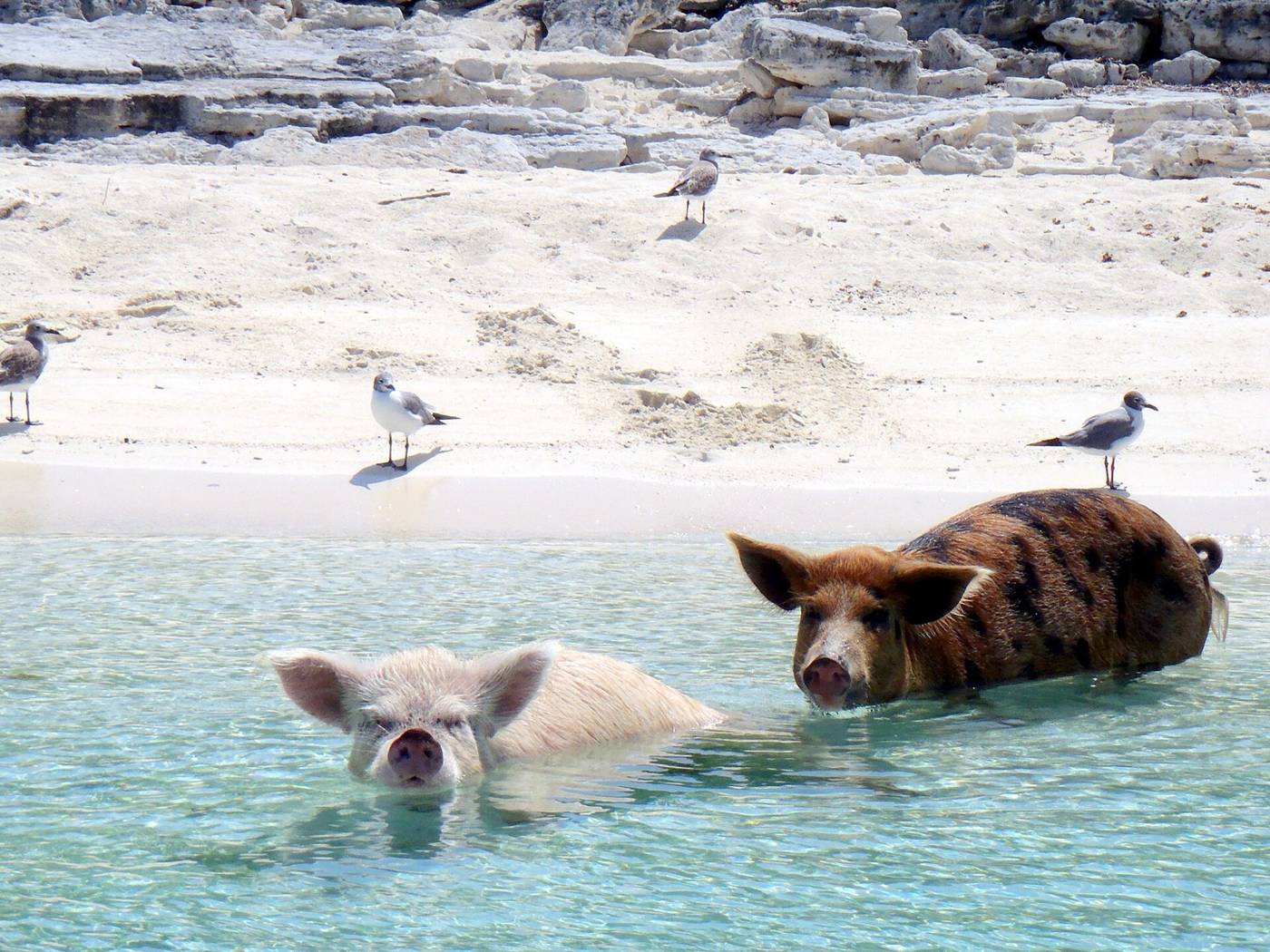
Big Major Cay is an uninhabited island near Staniel Cay, and the pigs are not native to it1. Pigs there are fed by residents of neighboring islands and by tourists3. Whether a visit helps or hurts them depends on what you hand over and how your boat behaves. For more planning pages, start at the Plan hub.
What happened to the pigs in 2017
In 2017, a number of the resident pigs were found dead3. Speculation about the cause included claims that tourists fed them alcohol3. A Humane Society inspector said the animals had likely ingested sand, and that a recent influx of tourism, not alcohol, was likely behind the deaths2.
Inspector Ventoi Bethune said that veterinarians who visited the site found large quantities of sand in the dead animals’ stomachs2. He said this may have been caused by a recent influx of visitors throwing small amounts of food on the beach2. He also said the pigs’ natural source of water had dried up after an unusually dry January, and that he believed a combination of factors caused the deaths2.
Bethune described a change in behavior. The pigs had been on the island so long that they foraged for natural food and went to the beach only for an occasional treat2. With the rise in tourism, he said, they relied on humans more than ever and stayed on the beach instead of living in the forest2. One of the pigs’ owners said people had been giving the pigs beer and rum2.
What the community does now
Bernadette Chamberlain and her husband John, restaurateurs on Staniel Cay, are described as dedicated custodians of the pigs, and they helped to establish several protective measures with other local volunteers1. The tourism board lists these1:
- Water tanks and a guttering system, so the pigs have fresh water even when volunteers are not there to refill the tanks.
- A nursery for piglets, so they get proper care and nutrition after birth.
- Separate pens for piglets and for sick animals, with a veterinarian from Nassau providing treatment.
- Signs that explain how visitors should interact with the pigs and which foods are “pig approved”.
- A trough that serves as the designated place to feed, so that the pigs do not ingest excess sand or saltwater.
Tour operators who visit also look after the pigs by bringing them food and water1.
How to feed and visit
The pigs are docile, and visitors are encouraged to act responsibly around them1. Treat the signs and the trough as the rules of the beach.
| What you do | Why it matters |
|---|---|
| Bring fruit, vegetables, bread or pig feed bought locally | These are the foods the signs list as “pig approved”1 |
| Feed at the trough | It keeps the pigs from ingesting excess sand or saltwater1 |
| Do not scatter food on the beach | Sand in the stomachs of the dead pigs may have come from small amounts of thrown food2 |
| Leave alcohol on the boat | One of the pigs’ owners said people had been giving them beer and rum2 |
| Arrive by boat | Big Major Cay is only accessible by boat, whether your own, a chartered one or a tour1 |
Choosing a tour or your own boat
Humane Society president Kim Aranha said local tour operators are respectful of the pig population, but that careless boaters can harm the animals2. She separated the “silly sailors” who feed alcohol from the tour operators based out of Nassau, who she said have treated the pigs with excellent care2.
If you book a tour, ask three things: whether the crew brings food and water for the pigs, whether guests feed at the trough, and whether alcohol stays off the beach. Our Nassau day trip guide covers the operators that run this stop, and the Big Major Cay page has the place details. If you arrive on your own vessel, the same rules apply to your crew. The cay lies near Staniel Cay3, where the restaurateurs who help care for the pigs run their business1.
Rules and enforcement
When National Geographic reported in 2017, boats could drive up to the pigs, and it was legal for tourists to swim with and feed them2. The Minister of Agriculture and Marine Resources, V. Alfred Gray, said that with boundary lines visitors would be able to photograph the pigs and watch them swim but not feed them2. The government also planned to post a warden on the beach to protect the animals2.
That plan dates from 20172. Ask the Exumas Tourist Office what rules apply on the beach before you go1.
Is it ethical to visit?
The 2017 deaths came with a surge in tourism, small amounts of food thrown on the sand, and a dry spell that emptied the pigs’ natural water source2. The measures listed above address water, feeding and visitor behavior1.
A visit that ignores those measures repeats the conditions Bethune described2. He said everyone in the community would still like people to come visit, and he hoped pig-swimming tourism would continue to thrive if the proper changes are made2.
Read next
Swimming pigs of Big Major Cay: where they are and what rules apply
Where the Exuma swimming pigs live, how to reach Big Major Cay, what to feed them, what happened in 2017, and why park rules do not apply there.
placesCompass Cay nurse sharks: swimming at the marina, rules and what else is on the island
Swim with docile nurse sharks at Compass Cay Marina in the Exumas: the high-tide dock swim, marina rules, who to call, and why Exuma Park rules do not apply.
getting thereNassau day trip to the Exumas: boat and plane tours compared
Day tours from Nassau to the Exumas compared: powerboat vs plane, adult prices, departure times, what is included, cruise-ship timing and cancellation terms.
Questions people ask
Are the swimming pigs in the Bahamas treated well?
Local volunteers on Staniel Cay built water tanks, a piglet nursery and separate pens for sick animals, and a veterinarian from Nassau treats those that need it1. Tour operators also bring food and water1. The Humane Society's president said careless boaters can harm the animals2.
Why do the Bahamas have swimming pigs?
Nobody knows for sure. One story says sailors left the pigs to cook later, and another says they swam ashore from a shipwreck1. The pigs are not native to Big Major Cay1.
Sources (3)
- Exuma Bahamas Swimming With PigsTOURISM
Bahamas Tourism (bahamas.com) · bahamas.com · checked 2026-10-18 - This Is What Really Killed The Famous Swimming Pigs
National Geographic · nationalgeographic.com · checked 2026-10-18 - Pig Beach
Wikipedia · en.wikipedia.org · checked 2026-10-18
Photo credits (1)
- cdorobek / Wikimedia Commons · CC BY 2.0 · source

Park fees and rules come from the Bahamas National Trust or the Bahamas government; check them again before you go. How we check facts.